
Apostille Versus Consular Legalization: Filipino Guide

Apostille and consular legalization are two distinct methods for authenticating documents for international use, and the destination country’s membership in the 1961 Hague Apostille Convention determines which one applies. Apostille is a single-step certificate issued by one authority and typically takes 1–4 weeks. Consular legalization involves 3–5 sign-offs and can take 3–6 months. For Filipinos preparing documents for the UAE or other Gulf countries, picking the wrong method means rejection, delays, and starting over. This guide breaks down both processes so you can move forward with confidence.
What is the difference between apostille versus consular legalization?
The core difference is treaty membership. If both the issuing country and the destination country are members of the Hague Apostille Convention, apostille applies. If the destination country is not a member, consular legalization is the required path.
The wrong process causes rejection and can derail visa applications or business plans. That is not a minor inconvenience. For a Filipino worker submitting employment documents to a non-Hague country, a rejected document can mean losing a job offer entirely.
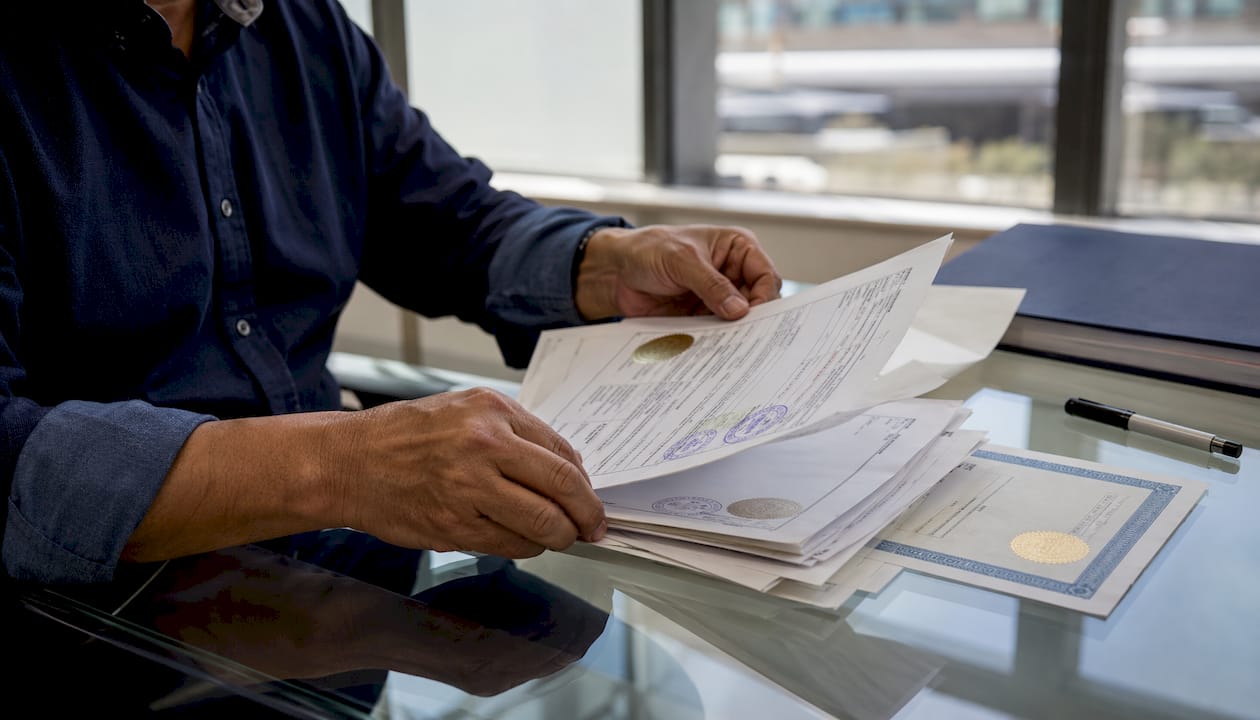
An apostille does not verify the truth of a document’s content. It certifies the authenticity of the official signature and seal only. The receiving country decides whether the document’s content is valid. That distinction matters because many applicants assume an apostille is a full endorsement of their records.
The UAE is not a member of the Hague Apostille Convention. Filipinos sending documents to the UAE must follow the consular legalization path, which involves multiple government offices and an embassy step. Understanding this upfront saves weeks of wasted effort. Harrisncharms specializes in exactly this process for Filipino expats in the UAE.
How does the apostille process work?
An apostille is a standardized certificate attached to a document to confirm that the issuing authority’s signature and seal are genuine. The Hague Apostille Convention, adopted in 1961, created this single-step system to replace the older, longer chain of authentications between member countries.
Steps for getting an apostille
Notarize the document with a licensed notary public whose commission is currently active.
Identify the correct authority. State-issued documents go to the relevant Secretary of State office. Federal documents go to the US Department of State, Office of Authentications.
Submit the document with the required form and fee. For federal documents, include form DS-4194 and a prepaid trackable return envelope. The fee is $20 per document.
Wait for processing. Mail submissions to the US Department of State typically take about 5 weeks. State offices vary but generally fall within the 1–4 week range.
Receive the apostille certificate attached to your original document, ready for use in any Hague member country.
The apostille office verifies the notary’s active commission before processing. An expired or missing notarization results in rejection. This is one of the most common reasons documents get sent back.
Pro Tip: Before submitting, confirm that your notary’s commission has not expired and that the notary is licensed in the correct state for the document you are authenticating. A mismatch here is the single fastest way to get your application returned.
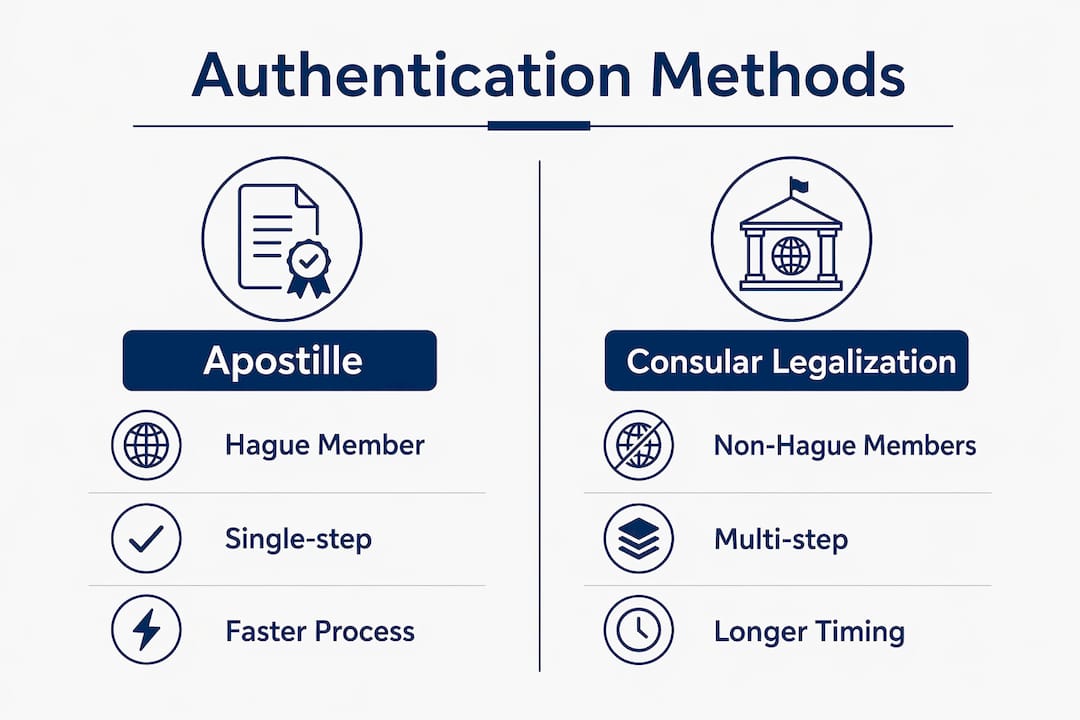
The apostille for international use is only valid between Hague member countries. Sending an apostilled document to a non-member country will not satisfy that country’s legal requirements.
How does the consular legalization process work?
Consular legalization is the authentication method for countries outside the Hague Apostille Convention. It is longer, more expensive, and involves more offices than apostille. The UAE, Saudi Arabia, and China are examples of countries that require this process.
The standard consular legalization chain
Notarization by a licensed notary public.
County clerk certification of the notary’s signature (required in some states).
State authentication by the Secretary of State office.
Federal authentication by the US Department of State. The fee here is $20 per document.
Embassy or consulate legalization by the destination country’s diplomatic mission. Embassy fees range from $30 to $400 depending on the country and document type.
The full process typically takes 3–6 months. That timeline reflects real-world delays at each stage, not just processing windows. Embassy offices have their own schedules, holidays, and backlogs.
What to watch for at the embassy stage
Each embassy sets its own rules. Some require certified translations of documents into the destination country’s language.
Some embassies require additional certifications or specific ID documents from the applicant.
Embassy fees are non-refundable, even if the document is returned for correction.
Appointment availability at some embassies is limited and can add weeks to the timeline.
Pro Tip: Contact the destination country’s embassy directly before you start the process. Confirm their current fee schedule, required documents, and whether they accept mail submissions or require in-person appointments. Requirements change, and outdated information is a common source of delays.
For Filipinos sending documents to the UAE, the consular legalization steps include authentication through the Philippine government, the UAE embassy in Manila, and then further attestation inside the UAE. That is a longer chain than most applicants expect.
How do you know which process your document needs?
The decision comes down to one question: is the destination country a member of the Hague Apostille Convention? If yes, use apostille. If no, use consular legalization.
Here is how to confirm and prepare:
Check the Hague Conference website for the current list of member countries. Membership changes, so verify the status for 2026 specifically.
Identify your document’s issuing authority. A birth certificate from a state vital records office is a state document. A federal court order is a federal document. Sending a document to the wrong jurisdiction causes rejection and restarts the clock.
Check document freshness. A valid apostille may be rejected if the underlying document is older than the receiving country’s accepted timeframe, which is commonly six months. This applies to consular legalization as well.
Confirm translation requirements. Some countries require documents to be translated into their official language before authentication. This adds time and cost.
Ask about the specific document type. Employment contracts, educational certificates, and civil documents sometimes follow different rules even within the same country.
The attestation versus apostille distinction also matters here. Attestation is the broader term used in countries like the UAE for the full legalization chain. Apostille is a specific treaty-based shortcut that does not apply to UAE-bound documents.
Common mistakes Filipinos make with document authentication
Most authentication errors are avoidable. They come from incomplete research, rushed submissions, and assumptions about how the process works.
Sending state documents to federal offices. A Philippine-issued document authenticated in the Philippines is not the same as a US state document. Know your document’s origin and the correct authority for each step.
Submitting with an expired notarization. Apostille offices check notary commission status. An expired commission means rejection.
Filling out DS-4194 incorrectly. A mismatch on form DS-4194 between the document details and the destination country information causes the Office of Authentications to return the submission unprocessed.
Underestimating the timeline. A 3–6 month consular legalization process does not account for your personal deadlines. Build in buffer time before visa applications, job start dates, or school enrollment deadlines.
Ignoring document expiry rules. Even a correctly authenticated document can be rejected if the original record is too old. Check the destination country’s freshness requirements before you start.
Pro Tip: Create a checklist for each document you are submitting. List the notary’s commission expiry date, the issuing authority, the destination country’s requirements, and the fee at each stage. One missed item at any step restarts the entire process.
Budgeting matters too. Between notarization, state fees, the $20 federal authentication fee, and embassy fees of $30–$400, a single document can cost several hundred dollars to fully legalize. Multiply that across multiple documents and the total adds up fast. Knowing the full cost upfront prevents surprises.
For Filipinos preparing Philippine documents for UAE use, the process involves the Department of Foreign Affairs in Manila, the UAE embassy, and then UAE Ministry of Foreign Affairs attestation. Each stage has its own fee and timeline.
Key Takeaways
Choosing between apostille and consular legalization is determined entirely by the destination country’s Hague Convention membership, and using the wrong method guarantees rejection.
Point | Details |
Hague membership decides the method | Apostille applies only when both countries are Hague Convention members; otherwise, use consular legalization. |
UAE requires consular legalization | The UAE is not a Hague member, so Filipinos sending documents there must complete the full multi-step chain. |
Timeline gap is significant | Apostille takes 1–4 weeks; consular legalization takes 3–6 months. Plan accordingly. |
Document freshness affects acceptance | Many countries reject documents older than six months, even with a valid apostille or legalization stamp. |
Wrong jurisdiction causes rejection | State documents go to state offices; federal documents go to the US Department of State. Mixing these up restarts the process. |
What I have learned from watching authentication errors derail real plans
I have seen Filipinos lose job offers because their documents arrived at the UAE embassy with an apostille stamp instead of the required consular legalization chain. The document looked official. It had a government seal. But the UAE does not recognize apostille, and the employer’s onboarding deadline passed while the applicant restarted the process from scratch.
The most common misconception I encounter is that apostille is always faster and therefore always better. That logic only holds when the destination country accepts it. For UAE-bound documents, apostille is not a shortcut. It is a dead end.
The second mistake I see constantly is underestimating how much the embassy stage varies. Two applicants submitting the same document type to the same embassy can get different requirements depending on when they apply, which officer reviews their file, and whether the embassy has updated its internal checklist. The only reliable move is to call the embassy directly and confirm requirements in writing before you submit anything.
Start early. For consular legalization, six months is not a conservative estimate. It is a realistic one. If you have a hard deadline, work backward from it and add a two-month buffer. Professional assistance is worth considering for complex cases, especially when multiple documents are involved or when the stakes are high.
— Harris
How Harrisncharms helps Filipinos get documents right the first time
Navigating apostille and consular legalization is time-consuming, and one wrong step can cost you months. Harrisncharms provides document attestation services built specifically for Filipino expats in the UAE and Gulf countries.

Whether your documents need DFA apostille processing, UAE embassy legalization, or full attestation for UAE use, Harrisncharms handles each step with accuracy and accountability. The team knows the current requirements for UAE-bound Philippine documents and keeps up with changes so you do not have to. Visit Harrisncharms to get started with your document authentication today.
FAQ
What is the main difference between apostille and consular legalization?
Apostille is a single-step certificate used between Hague Apostille Convention member countries. Consular legalization is a multi-step process required for countries outside the Convention, such as the UAE.
Does the UAE accept apostille?
No. The UAE is not a member of the Hague Apostille Convention. Filipino documents destined for the UAE must go through the full consular legalization chain, including DFA authentication and UAE embassy legalization.
How long does consular legalization take?
The consular legalization process typically takes 3–6 months from start to finish, depending on the destination country’s embassy processing times and the number of steps required.
Can an apostilled document expire?
Yes. Many countries reject documents older than six months, even if the apostille itself is valid. Always check the destination country’s document freshness rules before submitting.
What happens if I use apostille when consular legalization is required?
The document will be rejected by the receiving country. This can delay visa applications, employment processing, or legal proceedings, and you will need to restart the authentication process from the beginning.
Recommended
Comments