
Why Notarize Philippine Documents: A Guide for Expats
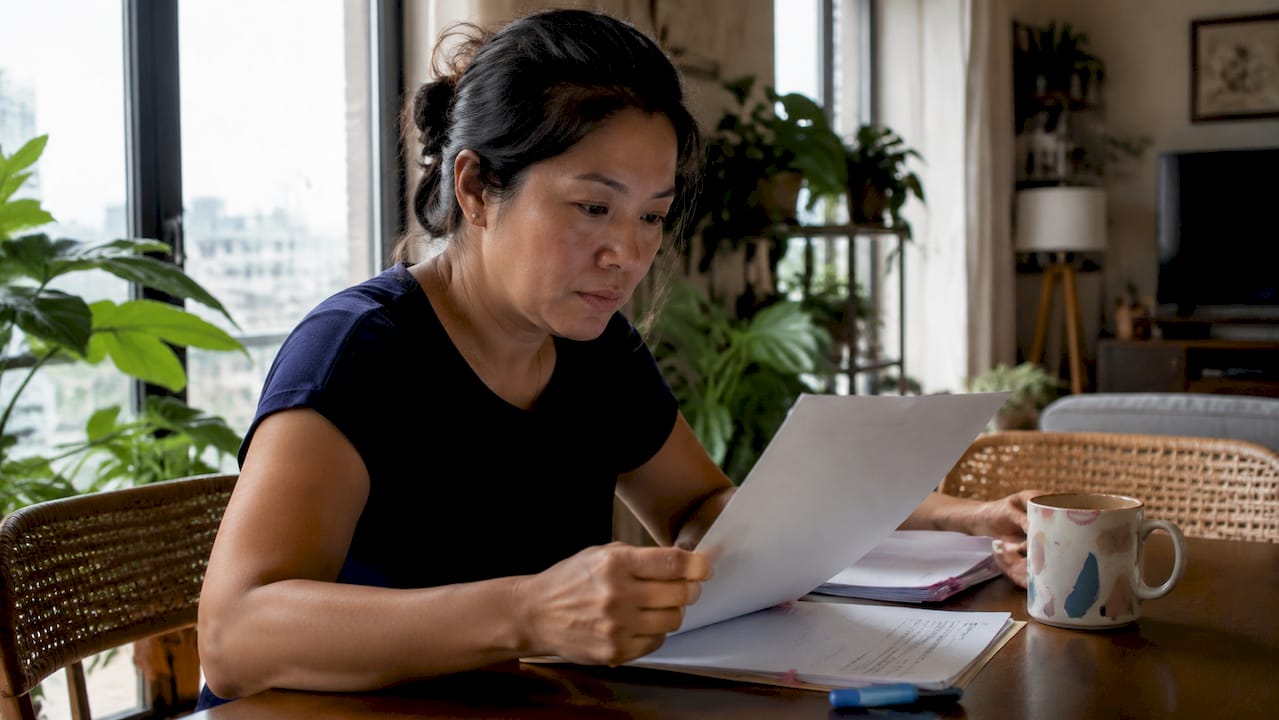
Notarization in the Philippines is the official act that converts a private document into a public document, giving it full legal standing before courts, government agencies, and financial institutions. If you are a Filipino living in the UAE and dealing with property, powers of attorney, or family matters back home, understanding why notarize Philippine documents is not optional knowledge. It is the difference between a document that works and one that gets rejected. Philippine law requires personal appearance, identity verification, and proper execution before a commissioned notary public, and skipping any step can void the entire document.
What legal benefits does notarizing Philippine documents provide?
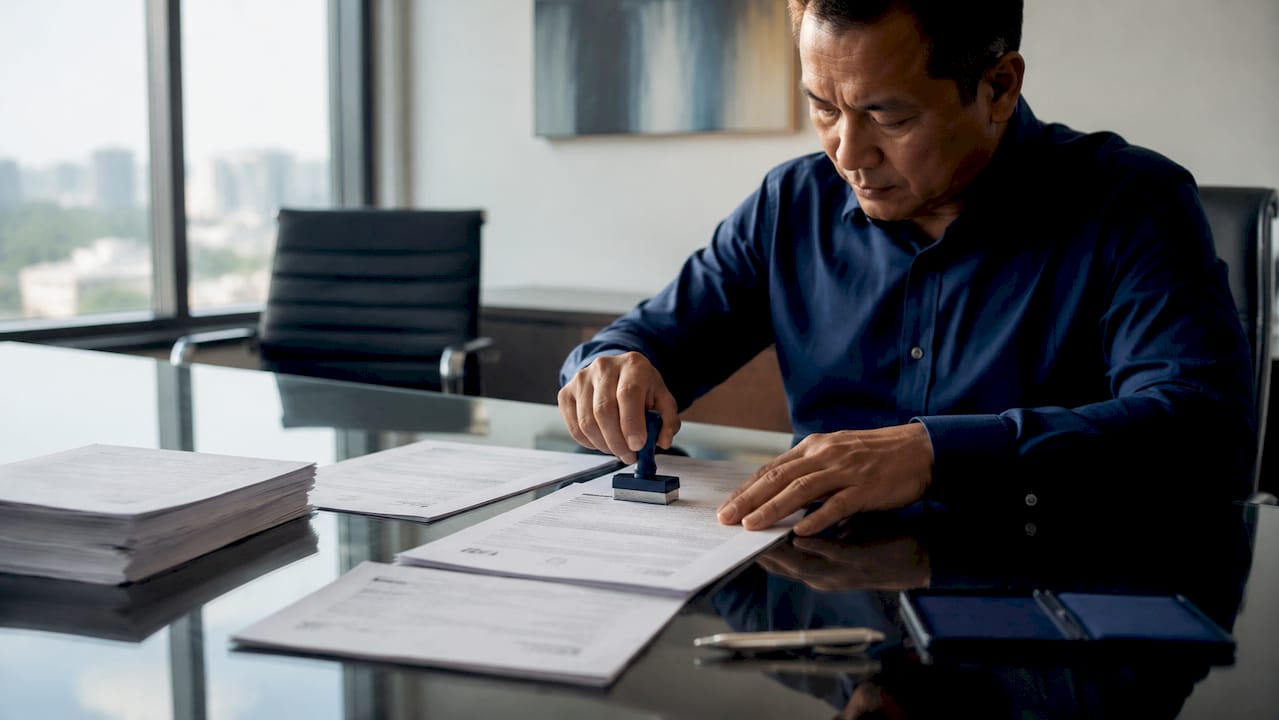
Notarization creates a presumption of authenticity and regularity that courts and agencies accept without requiring witnesses to testify about how the document was signed. That single benefit saves enormous time and money in legal proceedings. A private contract between two parties carries no such presumption. A notarized version of the same contract does.
The Philippine document notarization benefits extend well beyond courtrooms:
Real estate transactions: Deeds of sale and transfer documents must be notarized to be registrable with the Registry of Deeds.
Powers of attorney: Banks, government offices, and registries require notarized special or general powers of attorney before acting on them.
Loan and bank documents: Notarization is mandatory for high-stakes transactions like real estate deeds, powers of attorney, and bank loan documents to reduce fraud risk and ensure enforceability. Documents lacking notarization in these areas are routinely rejected.
Affidavits and sworn statements: These carry legal weight only when properly notarized.
Notarization also reduces fraud by verifying the signer’s identity at the moment of signing. The notary confirms you are who you say you are and that you signed willingly. That verification creates a legal record that is very difficult to dispute later. For Filipinos abroad managing assets or legal matters from a distance, this protection is not a formality. It is a safeguard.
What is the notarization process and key legal requirements in the Philippines?
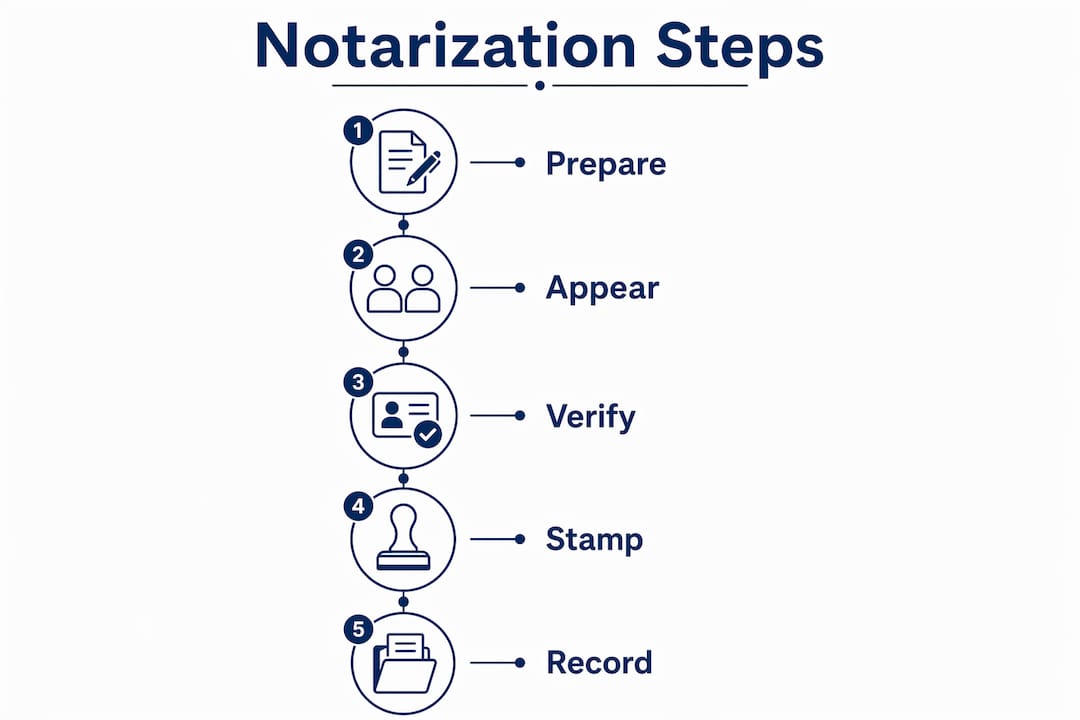
The notarization process in the Philippines follows strict rules under the 2004 Rules on Notarial Practice. Every step matters, and missing one can invalidate the document entirely.
Prepare the document fully. The document must be complete before you appear before the notary. Blank spaces are not permitted. Every detail, including names, addresses, and dates, must be accurate and final.
Appear in person. Personal appearance before the notary is mandatory. Remote or proxy signing is prohibited. The notary must see you, speak with you, and confirm your identity directly.
Present valid identification. The notary checks your government-issued ID against the personal data on the document. Strict ID matching, including spelling and suffixes, is required. Discrepancies cause immediate refusal.
Choose the correct notarial act. Acknowledgment authenticates execution and voluntariness; jurat administers an oath and certifies a sworn statement. Using the wrong form can cause rejection by agencies.
Sign before the notary. For a jurat, you sign in the notary’s presence. For an acknowledgment, you confirm that the signature on the document is yours.
Notary completes the certificate and logs the act. The notary records the transaction in an official notarial register, including your name, ID details, and the document type.
The notary public acts as a gatekeeper imbued with public interest, obliged to refuse notarization if fraud, coercion, or incapacity is suspected. This is not a rubber-stamp role. A notary who performs improper notarizations faces disbarment.
Pro Tip: Always bring at least two valid government-issued IDs with matching names and suffixes. Even a minor spelling difference between your ID and your document can result in a refused notarization.
Why is notarization especially important for Filipinos living abroad?
Filipinos living in the UAE face a specific challenge: Philippine government offices, banks, and registries still require notarized documents, but you cannot simply walk into a Manila notary’s office. The rules do not change because of geography.
Many institutional and government offices in the Philippines require notarized documents for acceptance, and this requirement extends to Filipinos abroad who must notarize documents through Philippine consulates or authorized notaries for local validity. The Philippine Embassy in Abu Dhabi and the Philippine Consulate General in Dubai both offer consular notarization services. These consular officers are authorized to perform notarial acts on Philippine documents, and their notarizations carry the same legal weight as those performed by a notary public in the Philippines.
Key considerations for Filipino expats in the UAE:
Consular appointments are required. Walk-in notarizations are not always available. Book your appointment early, especially for time-sensitive documents.
Post-notarization steps matter. A notarized document intended for use in the UAE may need additional steps such as apostille or legalization. Understanding how to legalize Philippine documents for UAE use is the natural next step after notarization.
Non-notarized documents get rejected. Philippine banks, the Land Registration Authority, and the Bureau of Internal Revenue will not process documents that lack proper notarization. Sending an unnotarized document home wastes time and money.
Coordination between UAE and Philippine requirements is complex. A document notarized by a UAE notary is not automatically valid in the Philippines. It typically requires authentication by the Philippine DFA and possibly the UAE Ministry of Foreign Affairs.
The attestation services available for Filipino expats in the UAE exist precisely because this coordination is complicated. Getting it right the first time prevents delays that can stretch into months.
Common misconceptions and pitfalls about notarizing Philippine documents
The most persistent misconception about notarization is that it certifies the truth of what a document says. It does not. Notarization verifies that the signer is who they claim to be and signed voluntarily, but it does not verify the truthfulness of document contents. A notarized document containing false information remains false. It is simply legally attributed to the signer, which actually increases the legal exposure of anyone who signs a false document.
Other costly mistakes to avoid:
Signing without appearing in person (“paiwan”). This practice is common but illegal. Notarizing a document without the signer present violates Philippine notarial rules and can render the document void. Notaries who do this face disbarment.
Using the wrong notarial act. Confusing acknowledgment and jurat forms causes document rejection. The correct form depends on the document’s purpose, not personal preference.
Submitting incomplete documents. A document with blank fields cannot be notarized. Filling in blanks after notarization invalidates the notarial certificate.
ID mismatches. If your passport says “Juan dela Cruz Jr.” but your document says “Juan dela Cruz,” the notary will refuse the transaction.
Skipping legal review for high-value transactions. Legal experts advise reviewing documents with a lawyer before notarization for high-value transactions to avoid costly errors and ensure legal compliance.
Pro Tip: The most expensive notarization is one that becomes useless later. Spending an hour with a Philippine lawyer before notarizing a deed of sale or special power of attorney is far cheaper than fixing a rejected or voided document from abroad.
How to properly notarize Philippine documents from abroad: step-by-step
Getting your Philippine documents properly notarized while living in the UAE requires planning. Here is a practical walkthrough:
Prepare the document with complete, accurate details. Every name, date, address, and figure must be final. Leave nothing blank.
Verify your ID matches the document exactly. Check spelling, suffixes, and middle names. Your passport is typically the most accepted ID at Philippine consulates.
Determine the correct notarial act. If you are acknowledging a deed or contract, you need an acknowledgment. If you are swearing to the truth of a statement in an affidavit, you need a jurat. When in doubt, consult a Philippine lawyer.
Book an appointment at the Philippine Embassy in Abu Dhabi or the Philippine Consulate General in Dubai. Both offices handle consular notarization. Check their official websites for current schedules and required fees.
Appear in person at your appointment. Bring the original document, your valid passport, and any supporting documents required for the specific transaction.
Sign or acknowledge the document before the consular officer. The officer will verify your identity, confirm your voluntariness, and complete the notarial certificate.
Handle post-notarization requirements. If the document will be used in the UAE, you may need to go through the apostille process for Filipino expats or full legalization, depending on the document type and the receiving institution.
For special documents like special powers of attorney, confirm with the receiving Philippine institution exactly what form and wording they require before you draft the document. Different banks and registries have specific templates they prefer.
Key takeaways
Notarizing Philippine documents is the single most important step in making any private agreement legally enforceable and accepted by Philippine courts, banks, and government offices.
Point | Details |
Notarization creates public documents | A notarized document carries a legal presumption of authenticity that courts and agencies accept without further proof. |
Personal appearance is non-negotiable | Signing without appearing before the notary is illegal and voids the document under Philippine law. |
Correct notarial act matters | Using acknowledgment when a jurat is required, or vice versa, causes rejection by agencies and registries. |
Expats must use consular notarization | Filipinos in the UAE must appear before the Philippine Embassy or Consulate General for valid notarization of Philippine documents. |
Post-notarization steps are required for UAE use | Notarized Philippine documents often need apostille or legalization before UAE institutions will accept them. |
Why I think most Filipinos abroad underestimate notarization
Most people treat notarization as a box to check. You get the signature, you get the stamp, and you move on. After years of working with Filipino expats on document compliance, I can tell you that attitude causes more problems than almost anything else.
The cases that end badly share a pattern. Someone signed a special power of attorney without appearing in person because it was inconvenient. Or they used an acknowledgment form when the bank specifically required a jurat. Or their ID had a suffix discrepancy they never noticed. By the time the document reaches a Philippine registry or bank and gets rejected, the person is back in Dubai with no easy way to fix it quickly.
What I have found is that the expats who avoid these problems are the ones who treat notarization as a legal act, not an administrative chore. They read the document before they sign it. They confirm the required form with the receiving institution. They book their consular appointment with enough lead time to fix problems if they arise.
The role of the notary in attestation is more significant than most people realize. A good notary protects you. A bad process, or a skipped step, creates liability that follows the document for years.
My honest advice: for anything involving property, inheritance, or financial authority, spend the extra time and money to get it right before you sign.
— Harris
How Harrisncharms helps you get it right the first time
Dealing with Philippine document requirements from the UAE is genuinely complicated. Harrisncharms specializes in document attestation and legalization support for Filipino expats, helping you navigate the steps between notarization and full acceptance by UAE or Philippine institutions.

Whether you need guidance on the Philippines document attestation process or help understanding what comes after your consular notarization appointment, Harrisncharms provides clear, practical support built specifically for Filipinos in the UAE. Visit harrisncharms.com to get personalized guidance on your specific documents and avoid the delays that come from getting the process wrong.
FAQ
What does notarization actually do to a Philippine document?
Notarization converts a private document into a public document with a legal presumption of authenticity. Courts and government agencies accept it without requiring witnesses to testify about how it was signed.
Can I notarize Philippine documents without appearing in person?
No. Personal appearance before the notary or consular officer is mandatory under Philippine notarial rules. Signing without appearing in person is illegal and can void the document entirely.
What is the difference between acknowledgment and jurat in the Philippines?
Acknowledgment confirms that the signer executed the document voluntarily. Jurat certifies that the signer swore an oath to the truth of the document’s contents. Using the wrong form causes rejection by banks and government offices.
Where do Filipinos in the UAE go to notarize Philippine documents?
Filipinos in the UAE must appear before the Philippine Embassy in Abu Dhabi or the Philippine Consulate General in Dubai for consular notarization of Philippine documents.
Does a notarized document mean the contents are true?
No. Notarization confirms the signer’s identity and voluntariness, not the accuracy of the document’s contents. A notarized document with false information is still false, and the signer bears full legal responsibility for it.
Recommended
Comments