
What Is a Notary Public? Duties, Limits, and How to Become One
Updated: Sep 2

A notary public is a state-commissioned official who acts as an impartial witness to deter fraud by verifying a signer’s identity, confirming their willingness to sign, and witnessing the execution of legal documents. That is the core function, and it has not changed in centuries. For state-specific rules, application steps, and fee schedules, start with your state’s Secretary of State office or the National Notary Association, which maintains state-level guidance for all 50 states. The New York Department of State is one example of a state office that publishes the full commissioning process online, including eligibility requirements and term length.
Table of Contents
When is notarization required and for which documents?
Notarization is not required for every contract or agreement. State law sets the baseline, but individual institutions, courts, and registries often add their own requirements on top of that.
Documents that commonly require notarization in the United States include:
Real estate deeds and mortgage documents
Powers of attorney (financial and healthcare)
Wills and trusts (requirements vary by state)
Advance medical directives and living wills
Affidavits and sworn statements
Vehicle title transfers
Business formation documents (articles of incorporation, operating agreements)
Adoption papers and parental consent forms
The variability is real. A will may require two witnesses and a notary in one state and only witnesses in another. A bank may require notarization on a document that no statute technically mandates. Always confirm with the receiving institution before you assume the standard process applies.
One additional layer applies when documents cross borders. A notarized document destined for use in another country will typically need an apostille or consular legalization on top of the notarization itself. That process is covered in detail later in this article.
What types of notaries exist in the United States?
Not every notary operates the same way. The role of a notary shifts depending on how and where they perform their acts.
Commissioned (traditional) notary: Appointed by the state, authorized to perform notarial acts in person within the state’s jurisdiction. This is the baseline. They work from a fixed location, often a bank, law office, or shipping store.
Mobile notary: A commissioned notary who travels to the signer’s location. Hospitals, nursing homes, real estate closings, and detention facilities are common destinations. Mobile notaries typically charge a travel fee on top of the statutory per-signature fee.
Remote online notary (RON): Performs notarial acts over an audio-video platform using electronic signatures and digital seals. Many states now authorize RON, though the technology requirements, identity-proofing standards, and permitted document types vary significantly. States like Virginia, Florida, and Texas were early adopters; others still restrict or prohibit it entirely.
One distinction worth making clearly: US notaries are not the same as civil-law notaries in countries like France, Germany, or Mexico. Civil-law notaries are legal professionals who draft binding instruments, advise parties, and hold broad authority over transactions. A US notary’s role is narrower and largely ministerial, as Cornell Law School’s WEX explains. Confusing the two leads to misplaced expectations, especially for immigrants or expats dealing with international documents.
Type | In-Person Required | Travels to Signer | Remote Possible | Typical Use Cases |
Commissioned notary | Yes | No | No | Deeds, affidavits, POAs at fixed location |
Mobile notary | Yes | Yes | No | Real estate closings, hospital signings |
Remote online notary | No | No | Yes | Loan documents, estate planning, expat needs |
How do you become a notary public in the United States?
The process is state-controlled, which means the steps, fees, and requirements differ depending on where you live. That said, the general roadmap is consistent enough to follow.
Check eligibility. Most states require applicants to be at least 18 years old, a legal resident of the state (or have a place of business there), and free of felony convictions. Some states run background checks.
Complete required training or pass an exam. Several states, including California and New York, require a notary education course or written exam before you can apply.
Submit your application. Applications go through the state Secretary of State or a designated state agency. The New York Department of State processes applications for a four-year commission term and requires either state residency or a principal place of business in New York. Michigan’s Secretary of State office publishes a similarly detailed process at Notary services, State of Michigan.
Obtain a surety bond if required. Many states require a bond (commonly $500–$15,000 depending on the state) to protect the public from notary errors. The bond does not protect the notary personally.
Take the oath of office. After approval, most states require you to appear before a county clerk or other official to take an oath.
Purchase your seal and journal. You cannot legally notarize without an official seal. Many states also require a journal from day one.
Receive your commission certificate. This is your official authorization to perform notarial acts.
Common stumbling blocks include fingerprinting requirements (California requires them), background check delays, and mismatched residency documentation. The Indiana Notary Public Guide is a good example of the level of statutory detail states publish, covering permitted acts, disciplinary rules, and application specifics in one document.
For state-specific requirements, the National Notary Association maintains a state-by-state resource center that is genuinely useful, especially for states with less prominent official guidance.
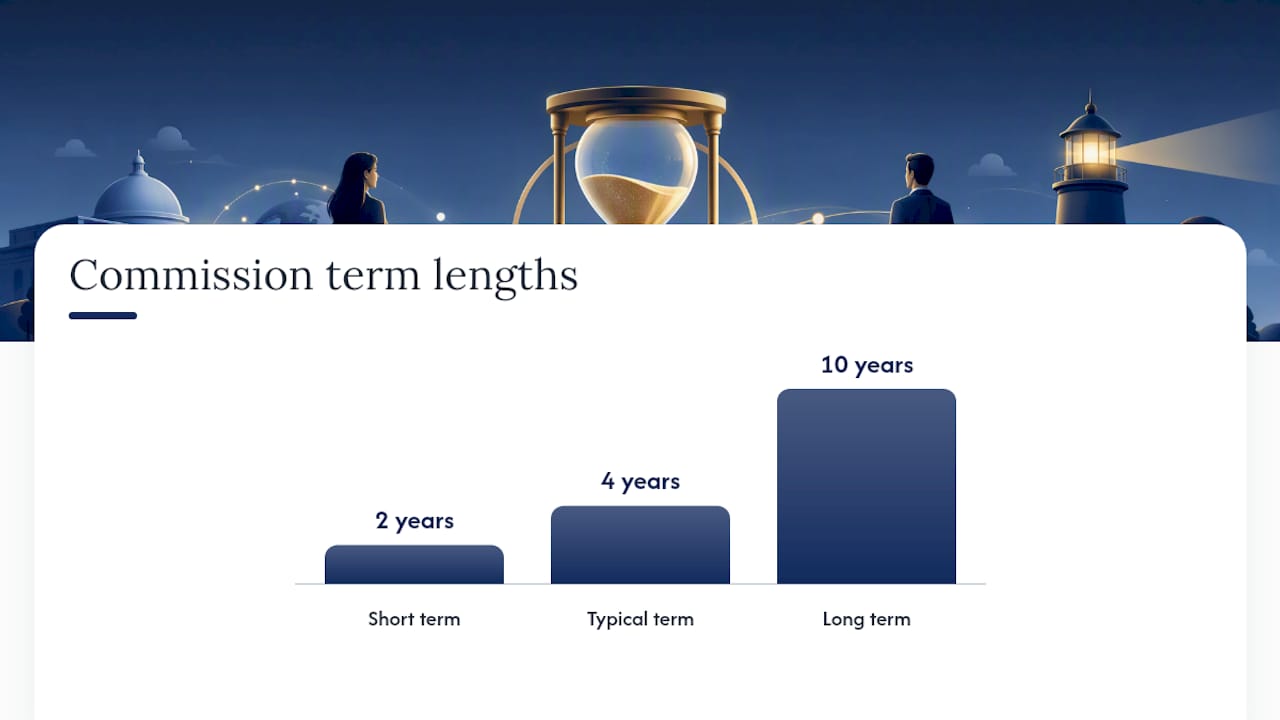
Commission terms typically run 4 years, though some states set 2-year or 10-year terms. Renewal follows the same basic process as the initial application.
What are the journal, seal, and recordkeeping requirements?
The journal and seal are not bureaucratic formalities. They are your primary defense if a notarization is ever challenged.

Journal requirements vary by state. Some states mandate a paper journal for every act. Others make it optional but strongly recommended. A growing number permit electronic journals for RON and, in some cases, in-person acts. The Texas Secretary of State publishes detailed guidance on journal and seal requirements, including what constitutes prima facie evidence of execution.
Every journal entry should include:
Date and time of the notarial act
Type of document notarized
Type of notarial act performed
Full name of the signer
ID type, issuing authority, and ID number
Signer’s signature in the journal
Fee charged
Names of any witnesses present
Seal requirements are equally specific. The seal must display your name exactly as it appears on your commission, your commission number, the state, and in many states, your commission expiration date. An embosser and an ink stamp are both used; check your state’s rules on which is acceptable and whether electronic seals are permitted.
Store your seal and journal securely. Unauthorized use of a notary seal is a criminal offense in most states.
Pro Tip: Retain journal entries for the full state-mandated period after your commission expires, not just while you are active. Scan and back up entries where your state permits electronic copies. A missing journal is a liability, not just an inconvenience.
What can notaries not do, and what are the liability risks?
The notary’s seal is not a legal review. It does not mean the document is valid, enforceable, or truthful. As Investopedia explains, the seal provides evidence that a signature is genuine and that signing occurred in the notary’s presence. Nothing more.
Prohibited acts include:
Giving legal advice or explaining the legal effect of a document (unless the notary is also a licensed attorney)
Drafting legal documents for others
Notarizing when the notary has a personal financial interest in the transaction
Notarizing without the signer physically present (unless RON is authorized by state law)
Notarizing a document the notary knows contains false statements
Notarizing a blank or incomplete document
Cornell Law School’s WEX notes that notarizing without the signer’s presence or notarizing false documents can trigger criminal charges, not just administrative penalties.
The liability picture is worth understanding clearly. Notaries are personally liable for negligence and fraud. Many states require a surety bond, but as the Texas Secretary of State makes clear, the bond protects the public, not the notary. A $10,000 bond does not cap your personal exposure at $10,000.
If you receive a complaint or a subpoena related to a notarial act, consult an attorney immediately and do not alter or destroy any records.
How do you use a notarized document abroad?
Notarization is the starting point, not the finish line, when a document needs to work in another country.
Apostille vs. consular legalization is the key distinction. The Hague Apostille Convention, which the United States joined, allows member countries to accept a standardized certificate (the apostille) instead of a full chain of consular authentication. If the destination country is a Hague member, an apostille is typically sufficient. If it is not, you will need consular legalization, which involves additional steps through the foreign country’s embassy or consulate.
Steps to prepare a notarized document for international use:
Have the document notarized by a commissioned US notary.
Confirm whether the destination country is a Hague Convention member.
If yes, obtain an apostille from the designated state authority, usually the Secretary of State’s office for the state where the notary is commissioned.
If no, submit the notarized document for consular legalization through the destination country’s embassy or consulate in the United States.
Verify whether the destination country also requires a certified translation.
For Filipino expats and overseas workers, this process has specific nuances. Philippine documents used in the UAE, for example, follow a distinct attestation chain that goes beyond a standard US apostille. Harrisncharms specializes in exactly this workflow, handling apostille and consular legalization for Philippine documents destined for the UAE and other international jurisdictions.
Start the verification process early. Some countries require additional certification layers, and embassy processing times can run several weeks.
For a detailed walkthrough of the apostille process, the Key Stages of Apostille guide covers each step clearly.
Why precise notarization matters: common mistakes and real consequences
Errors in notarization are not just paperwork problems. They create downstream legal and financial costs that can take months to untangle.
The Indiana Notary Public Guide identifies meticulous documentation as critical, noting that errors in certificate wording, ID recording, or journal entries are frequent causes of rejected filings and court challenges. A deed recorded with a defective acknowledgment certificate can cloud a property title. An affidavit with a missing jurat can be thrown out of court. A power of attorney with the wrong certificate language may be rejected by every financial institution that sees it.
“A notary’s seal provides prima facie evidence that the signature is genuine and that the signing occurred in the notary’s presence — but it does not guarantee the document’s substantive truth or legality.” — Texas Secretary of State
A practical checklist to avoid the most common errors:
Verify the signer’s ID against the name on the document before proceeding
Confirm the signer is present, competent, and acting voluntarily
Use the correct certificate language for the specific notarial act (acknowledgment vs. jurat are not interchangeable)
Complete the journal entry fully before the signer leaves
Secure the seal immediately after use
The common mistakes in attestation resource from Harrisncharms covers recurring errors in notarization and attestation workflows, with practical guidance on avoiding them.
Where can you get a document notarized?
Options are more plentiful than most people realize, and the right choice depends on your document type, timeline, and location.
Law offices: — Attorneys’ offices routinely notarize documents, particularly for estate planning, real estate, and business matters.
Mobile notaries: Search the National Notary Association directory or a state notary registry to find a mobile notary who will come to you.
State notary directories: Many Secretary of State offices maintain searchable databases of commissioned notaries. Colorado, for example, provides an online notary verification tool that confirms active commissions in real time.
What to bring: A current, government-issued photo ID (passport, driver’s license, or state ID), the document to be notarized (unsigned, unless the notary instructs otherwise), any required witnesses, and the fee. Some documents require specific ID types, so check with the notary in advance.
Key Takeaways
A notary public is a state-commissioned impartial witness whose core function is fraud prevention through identity verification, signature witnessing, and proper documentation of notarial acts.
Point | Details |
Core function | Notaries verify identity, witness signatures, and administer oaths to deter document fraud. |
State rules govern everything | Eligibility, fees, journal requirements, and permitted acts all vary by state — check your Secretary of State. |
Seal has limits | A notary’s seal confirms execution, not the truth or legal sufficiency of a document’s contents. |
International use needs more steps | Notarized documents used abroad require an apostille (Hague countries) or consular legalization. |
Errors carry real consequences | Wrong certificate language, missing journal entries, or absent signers can invalidate a document entirely. |
The part most guides skip over
Most explainers on notarization spend their energy on the process and almost none on the judgment calls that actually trip people up. The biggest recurring issue is not a missing seal or a forgotten journal entry. It is notaries who do not push back when something feels off.
A signer who cannot clearly state what they are signing, a document with blank fields, a situation where the person presenting ID does not match the name on the document — these are moments that require the notary to stop, not proceed and hope for the best. The notary’s role is specifically to be the friction in the process. That friction is the point.
For readers who need notarized documents to work internationally, particularly Philippine documents for use in the UAE, the chain of authentication matters as much as the notarization itself. Harrisncharms handles the full attestation and legalization workflow for Filipino expats, from the initial notarization through apostille or consular legalization and UAE acceptance. Getting the first step right makes every subsequent step cleaner.
Authoritative sources and where to read more
The resources below are the most reliable starting points for state rules, national guidance, and international document requirements.
Resource | What it covers |
State-by-state guidance, training, and notary directory | |
NY commissioning steps, term length, eligibility, and application | |
Detailed application steps and state-specific requirements | |
Journal, seal, bond, and liability guidance | |
Comprehensive statutory detail on permitted acts and discipline | |
Legal scope, civil-law notary contrast, statutory foundations | |
Accessible overview of duties, steps, and common document types | |
Live notary commission verification tool |
For apostille procedures, contact the Secretary of State office in the state where your notary is commissioned. For non-Hague countries, contact the destination country’s embassy or consulate directly. The Why Non-Hague Countries Need Attestation guide from Harrisncharms explains the full legalization chain for countries outside the Hague Convention.
Recommended
Comments